Seed Starting & Seedling Identification: Know What You're Growing
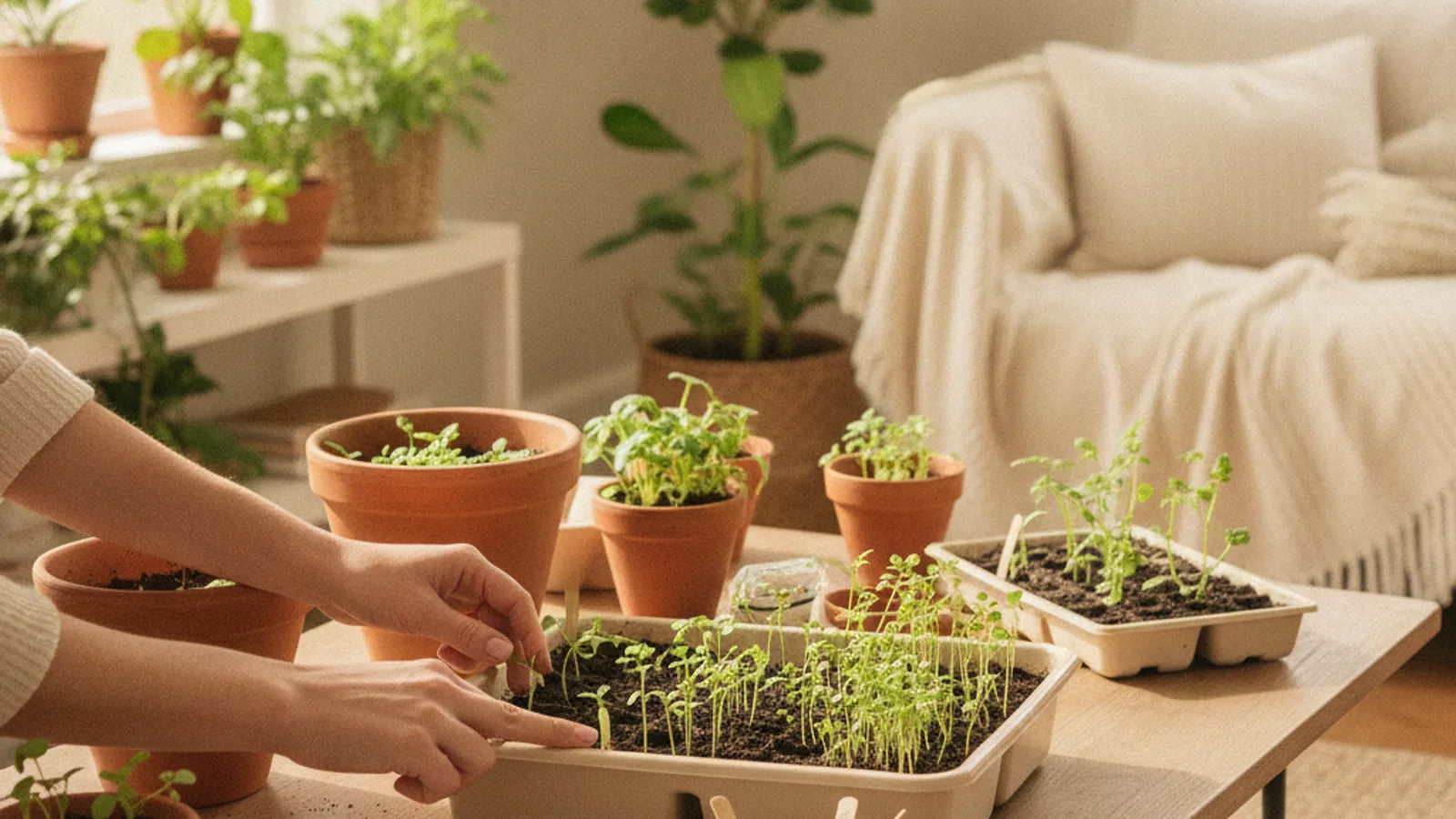
You planted your seeds, waited patiently, and now tiny green shoots are pushing through the soil. But wait, is that your tomato seedling or a weed hitchhiker? When every seedling looks like a generic tiny plant, telling them apart takes a bit of knowledge. This guide will help you understand seedling development, identify common vegetable, herb, and flower seedlings, spot weed imposters, and know exactly when your starts are ready for the great outdoors.
Cotyledons vs. True Leaves: The Basics
Every seedling goes through the same two-stage leaf development, and understanding this is the key to identification.
Cotyledons (Seed Leaves)
The first "leaves" you see aren't really leaves at all, they're cotyledons, or seed leaves. These were pre-formed inside the seed and are essentially the seed's built-in food supply to fuel initial growth. Cotyledons tend to be:
- Simple and generic-looking, usually oval or rounded
- Smooth-edged, no serrations, lobes, or complex shapes
- Similar across many species, tomato and pepper cotyledons look almost identical
- Paired (in dicots) or single (in monocots like grasses and onions)
Most vegetable and flower seedlings are dicots, meaning they emerge with two cotyledons. Monocots (corn, onions, grasses) emerge with a single blade-like leaf.
True Leaves
The second set of leaves, the true leaves, is where identification gets possible. True leaves show the plant's actual genetic characteristics:
- Distinctive shapes, lobed, serrated, compound, or smooth depending on species
- Characteristic textures, fuzzy (tomato), smooth (pepper), aromatic (basil)
- Species-specific patterns, the leaf shape you'd recognize on the mature plant, just miniature
Rule of thumb: wait for true leaves before trying to identify a seedling. At the cotyledon stage, almost everything looks the same.
Common Vegetable Seedlings
Tomato (Solanum lycopersicum)
Cotyledons: Narrow, elongated ovals with pointed tips. True leaves: Distinctively compound with serrated (toothed) leaflets. The leaves and stems are fuzzy and have a characteristic tomato smell when rubbed. One of the easiest seedlings to identify by scent alone.
Pepper (Capsicum spp.)
Cotyledons: Very similar to tomato, narrow ovals. True leaves: Smooth, glossy, lance-shaped with smooth edges (no serration). The key difference from tomato: pepper leaves are smooth and shiny, not fuzzy. No strong scent when rubbed.
Cucumber / Squash / Melon (Cucurbit family)
Cotyledons: Large, oval, and thick, noticeably bigger than most other seedlings. True leaves: Lobed and slightly rough-textured. Cucumber leaves are triangular with pointed lobes. Squash leaves are large, rounded, and sometimes prickly. These seedlings grow fast and get big quickly.
Lettuce (Lactuca sativa)
Cotyledons: Small, rounded, and paddle-shaped. True leaves: Vary by variety, loose-leaf types have ruffled edges, romaine produces elongated upright leaves, butterhead types are smooth and rounded. All are thin and tender.
Brassicas (Broccoli, Cabbage, Kale, Cauliflower)
Cotyledons: Heart-shaped or kidney-shaped, distinctive among vegetable seedlings. True leaves: Rounded with slightly scalloped edges, often with a waxy or bluish-green coating. The problem: all brassicas look nearly identical as seedlings. Label your trays!
Mystery seedling in your tray?
Snap a photo and let our AI identify it instantly, even at the seedling stage.
Common Herb Seedlings
Basil (Ocimum basilicum)
Cotyledons: Small, rounded. True leaves: Oval with slightly cupped shape, smooth edges, glossy, and strongly aromatic even when tiny. The scent is unmistakable, if it smells like basil, it's basil.
Cilantro / Coriander (Coriandrum sativum)
Cotyledons: Long, thin, grass-like (unusual for a dicot). True leaves: First true leaves are simple and fan-shaped; later leaves become the familiar feathery, compound leaves. The transition is dramatic, don't mistake the early simple leaves for a weed.
Parsley (Petroselinum crispum)
Cotyledons: Thin, grass-like (similar to cilantro). True leaves: Flat-leaf parsley produces triangular, flat compound leaves. Curly parsley produces tightly ruffled leaves. Parsley is one of the slowest herbs to germinate, 2-4 weeks is normal.
Dill (Anethum graveolens)
Cotyledons: Single thin blade. True leaves: Feathery, thread-like, and distinctively wispy. Dill seedlings are delicate and have a faint dill aroma early on.
Common Flower Seedlings
Sunflower (Helianthus annuus)
Hard to miss, sunflower seedlings are big and bold from day one. Cotyledons are large, thick, and oval. True leaves are rough-textured, heart-shaped, and grow quickly. Often the seed shell rides up on the cotyledons as a "hat."
Marigold (Tagetes spp.)
Cotyledons: Narrow and strap-like. True leaves: Compound with narrow, serrated leaflets and a pungent marigold scent. Easy to identify by smell.
Zinnia (Zinnia elegans)
Cotyledons: Rounded and spade-shaped. True leaves: Oval to lance-shaped, opposite, with a slightly rough texture and visible veining. Sturdy seedlings that grow quickly.
Spotting Weed Imposters
Weeds will inevitably show up in your seed trays, especially if you're using garden soil or non-sterile media. Here's how to catch them:
- Location: Seedlings growing exactly where you placed seeds are probably yours. Random sprouts between cells, at tray edges, or in unexpected spots are likely weeds.
- Timing: Check seed packet germination times. If something sprouts in 2 days but your seeds take 7-14 days, it's a weed.
- Uniformity: Your planted seeds should germinate at roughly the same rate and look similar. An oddball that looks different is suspect.
- Growth rate: Many weeds grow faster than cultivated seedlings. If one plant is dramatically outpacing its neighbors, examine it closely.
- Grass imposters: Thin, single-bladed sprouts in your seed trays are almost always grass or weed seeds that hitched a ride in your soil mix.
Pro tip: Use sterile seed-starting mix (not garden soil) to dramatically reduce weed seeds in your trays. If you're still unsure about a seedling, snap a photo with our plant identifier, it works on seedlings too.
When to Transplant
Timing your transplant correctly is the difference between thriving plants and transplant shock casualties. Here's the checklist:
Signs your seedlings are ready:
- 2-4 sets of true leaves have developed (not just cotyledons)
- Stems are sturdy and thick, not thin and leggy
- Root system is established, you can see roots at drainage holes or when gently tipping out of the cell
- Seedling is proportionate, healthy height-to-width ratio, not stretched and floppy
The hardening-off process:
Don't move seedlings straight from indoor warmth to outdoor conditions, they'll go into shock. Harden them off over 7-10 days:
- Days 1-2: Set seedlings outside in a sheltered, shaded spot for 1-2 hours
- Days 3-4: Increase to 3-4 hours with some filtered sunlight
- Days 5-6: Move to 5-6 hours with increasing direct sun exposure
- Days 7-8: Full day outdoors, bring in at night if frost threatens
- Days 9-10: Leave out overnight if temperatures are safe; transplant
Timing by plant type:
- Cold-hardy (transplant 2-4 weeks before last frost): Broccoli, cabbage, kale, lettuce, onions, peas
- Frost-sensitive (transplant after last frost): Tomatoes, peppers, basil, squash, cucumbers, marigolds, zinnias
- Heat-lovers (transplant 1-2 weeks after last frost): Melons, eggplant, sweet potatoes
Frequently Asked Questions
What's the difference between cotyledons and true leaves?
Cotyledons are the first leaves that emerge, they're simple, rounded, and pre-formed inside the seed. True leaves come next and show the plant's actual leaf shape (lobed, serrated, compound, etc.). Wait for true leaves before trying to identify seedlings.
How do I tell seedlings from weeds in my seed trays?
Check location (did you plant there?), timing (does it match the seed packet?), and appearance (does it match its neighbors?). Using sterile seed-starting mix prevents most weed problems. When in doubt, use our free plant identifier.
When should I transplant seedlings outdoors?
After 2-4 sets of true leaves have developed, stems are sturdy, and you've hardened them off for 7-10 days. Cold-hardy plants can go out before last frost; frost-sensitive plants must wait until after.
Related reading: Early Spring Weed Identification · Houseplant Care Guide for Beginners · Common Weeds Identification
Related Articles
Spring Flower Identification Guide Identify spring flowers as they bloom. Early Spring Weed Identification Don't confuse weeds with your seedlings. Houseplant Care Guide Start your plant journey indoors.- Know your plants 🌿 -
Upload a Photo